Explainer · Clause 1.14 · A world where animals live their own lives Clause text
Why the Society renounces the use of animals
The clause on nature holds three ideas: treat nature as a partner, protect its sustainability, and give up using animals. What stands behind each one, why the last is stated so bluntly, and how it fits with freedom of choice.
At dinner, a child asks what the chicken nuggets are made of. “Was the chicken alive?” The adults trade glances, and someone says, “Eat up before it gets cold.”
An hour later, the same child falls asleep with an arm around the dog. The dog has a name, its own bowl, a vet, and a birthday the whole family celebrates.
Almost everyone loves animals, and almost everyone uses them every day: we eat them, wear them, and buy tickets to look at them. We’ve grown used to keeping these two things in separate rooms, with the door between them closed.
Three ideas, one clause
Clause 1.14 fits on a single line, yet it holds three ideas, and each of them carries real weight.
The Society strives for harmony with nature, supports ecological sustainability, and renounces the use of animals.A world where animals live their own lives
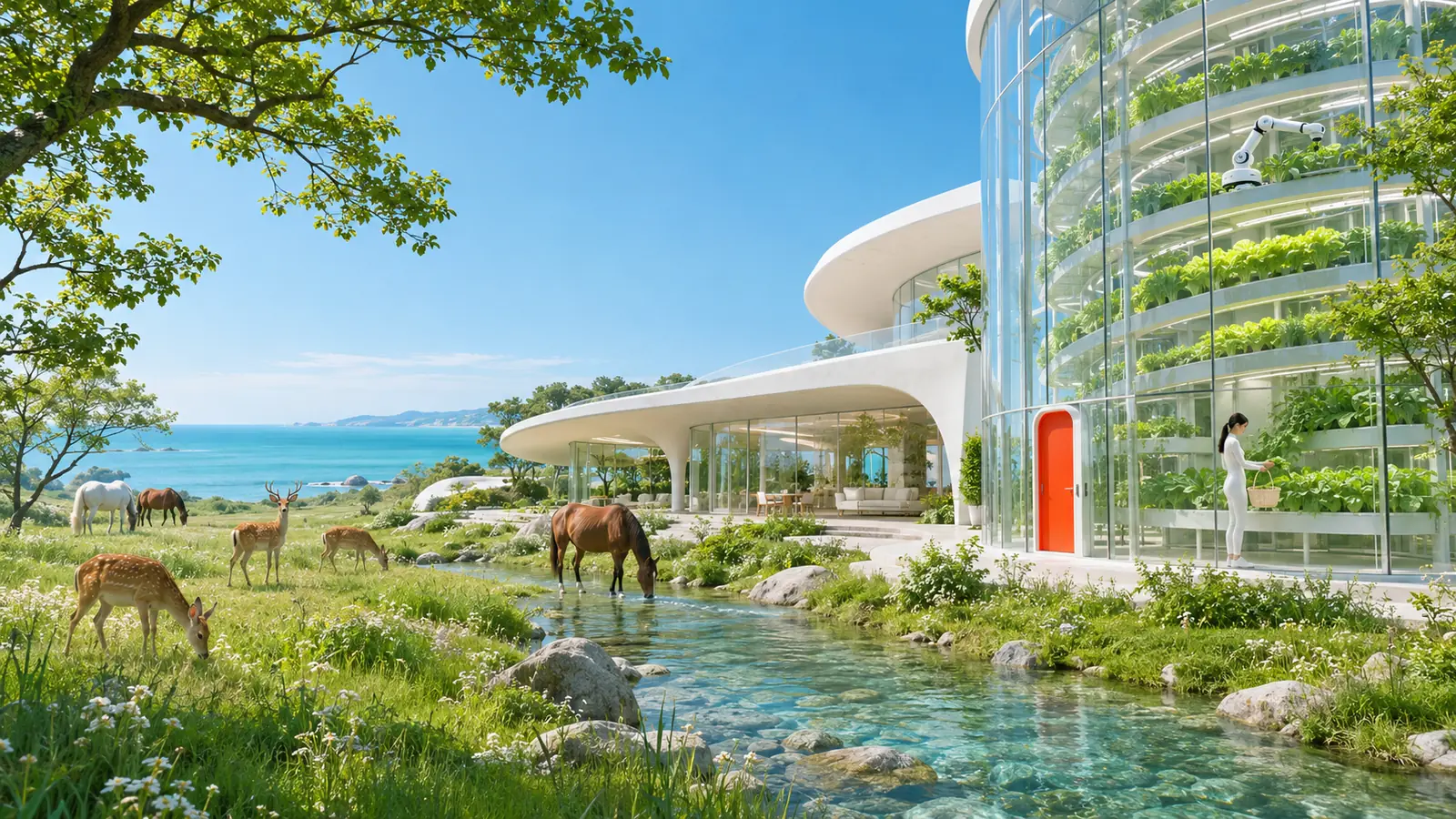
Harmony with nature. The relationship with the planet is built on partnership rather than conquest. Technology is gentle, cities are woven into the natural landscape, and human life leaves ecosystems intact.
Ecological sustainability. Here the Society reasons pragmatically. A healthy planet is the foundation of people’s own long-term well-being, so in its view, caring for the environment is a direct condition of prosperity.
Renouncing the use of animals. The third idea sounds sharper than the other two, and it should be read literally. The clause contains no qualifiers: it speaks of giving up the use of animals, not of reducing it or of using animals “humanely.” The Society’s commentary calls this a conscious ethical choice rooted in respect for all living things: a renunciation of any practice that causes other creatures harm and suffering. In everyday life, that covers a great deal: meat and fish on the table, leather and fur in the closet, animals that perform for an audience.
Two pictures
The difference is easiest to see in ordinary things.
| Life as you know it | Life under Clause 1.14 |
|---|---|
| Nature is conquered: forests are cleared, wetlands drained, land built over | Nature is a partner: technology is gentle, and cities fit into the landscape |
| Damage to nature is treated as the price of progress, to be paid off later | The planet’s health is treated as the basis of people’s own well-being |
| Animals serve as a resource: food, material, entertainment | Animals live their own lives |
| The cost of convenience is hidden behind tidy packaging | A way of life is openly built on respect for all living things |
| Loving animals and using them live in separate rooms | Attitudes toward animals stay the same at home, at the table, and in the store |
A principle like this changes a great deal in daily life, so people accept it consciously and in advance, knowing exactly what it will change.
Why this way
The clause rests on two foundations: calculation and ethics.
The calculation is simple. The Constitution sets the Society a goal: the happiness and well-being of every citizen (Clause 1.2). Lasting well-being is only possible on a healthy planet, and harm done to nature eventually comes back to people through the air, the water, and the food. That makes harmony with nature a practical choice in favor of one’s own future. The Society plans to achieve it through eco-technologies with minimal environmental impact (Clause 2.6).
The ethical foundation is the non-aggression principle (Clause 1.4). It forbids the use of force, threats, and coercion against any rational being. The Society’s commentary takes the idea further: the rejection of aggression extends to all living things. Giving up the use of animals follows directly from that view.
The commentary is specific about what this gives a person: a clean, stable place to live, a sense of connection with the world instead of opposition to it, and the inner peace of knowing that your way of life is built without anyone else’s suffering. Think back to the two rooms from the beginning. In a life shaped by Clause 1.14, the door between them stands open: love for animals and everyday habits share the same room.
What about freedom?
Clause 1.14 meets its strongest resistance from people who value freedom of choice. It’s a serious concern, and it deserves to be stated in full.
The Society’s answer rests on voluntary choice and on the difference between your own body and the life of another creature.
Try it on
The list in the story above gives an honest picture of what the clause costs: habits that will have to change, and the effort that takes.
What it gives back is easier to feel than to list.
Everyone’s answer is different. For some, clean air matters most; for others, a city where nature begins right outside the door; for others still, the chance to answer a child’s question at dinner calmly and straight.
Here is what in the clause is already settled, and what still lies ahead.
- Value
- Harmony with nature: the relationship with the planet rests on partnership, and technology is gentle.
- Value
- Ecological sustainability as a condition for every citizen’s long-term well-being (Clause 1.2).
- Value
- Renouncing the use of animals: a conscious ethical choice grounded in respect for all living things and in the non-aggression principle (Clause 1.4).
- Value
- Voluntary citizenship: a person accepts this principle along with the decision to become a citizen (Clause 1.1).
- Desired future
- Eco-technologies with minimal environmental impact (Clause 2.6).
- Desired future
- Cities woven harmoniously into the natural landscape.